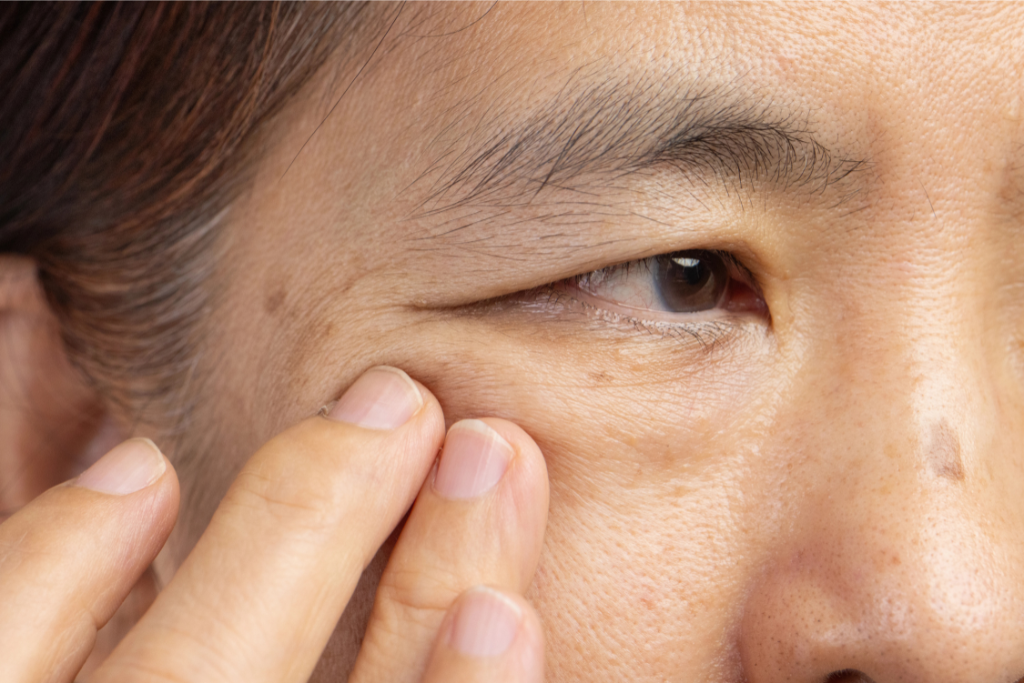
Do people keep asking if you’re tired, even when you’re not? We all know that this is more of a loaded question, a subtle jab, especially when you’ve had a full night’s sleep and a double shot of espresso.
But if you have eyelids that are chronically droopy, you’ll eventually notice them yourself in the mirror: the heavy upper lids, the slight sagging, the sleepy expression that doesn’t match your actual energy levels.
In a city as vibrant as Los Angeles, eyelid surgery is often discussed in the context of Hollywood red carpets and anti-aging secrets. We commonly call it eye rejuvenation, and while the cosmetic benefits are undeniable, there is a much deeper conversation to be had because, for many, those tired eyes are actually quite the functional hurdle.
At Soroudi Advanced LASIK & Eye Centers, we often find that what a patient perceives as a cosmetic annoyance is actually a medical condition that impacts their quality of life.
That is, sometimes a blepharoplasty isn’t just about looking younger but about literally being able to see the world clearly again. Here’s everything you need to know about droopy eyelids versus tired eyes and when eyelid surgery is in the cards.
Droopy Eyelids vs. Tired Eyes: What’s the Difference?
Tired Eyes (The Temporary Kind)
We’ve all been there. After a marathon of late-night emails or a seasonal allergy flare-up, your eyes look puffy and dark.
- Causes: Lack of sleep, digital eye strain from blue light, dehydration, or allergies.
- Symptoms: Redness, dryness, mild puffiness, and dark circles.
- The Fix: Usually, these resolve with rest, hydration, and proper eye care.
Droopy Eyelids (The Structural Kind)
If your lids remain heavy despite a week of vacation, you’re likely dealing with a structural change. In the medical world, we categorize this in two main ways:
- Ptosis: Ptosis occurs when the muscle responsible for lifting the eyelid (the levator muscle) stretches or weakens. The lid itself sits lower than it should, often covering part of the pupil.
- Dermatochalasis: This is the technical term for baggy or excess skin on the eyelids. As we age, the skin loses elasticity, and gravity pulls it downward.
Unlike general fatigue, these conditions are often driven by genetics, the natural aging process, or previous eye surgeries. The key distinction is that, unlike temporary tired eyes, they don’t improve with rest.
Non-Cosmetic Reasons for Blepharoplasty
How do you know when your eyelids have crossed the line from aging gracefully to obstructing your life? If you are seeking droopy eyelids or tired eyes treatment, pay attention to these functional red flags:
- Obstructed Upper Vision: You feel like you’re looking out from under a visor. You might notice you can’t see the top of the TV screen or the traffic lights above you without tilting your head back.
- Difficulty Reading or Driving: If you find yourself constantly straining to keep your eyes open while reading a book or driving in the evening, your eyelids may be the culprit.
- The “Eyebrow Lift” Habit: Do you notice deep horizontal lines on your forehead? Many people with droopy eyelids subconsciously use their forehead muscles to lift their eyelids. By the end of the day, this leads to…
- Eye Strain and Headaches: Constant muscle tension in the brow and forehead often results in tension headaches by mid-afternoon.
In these instances, eyelid surgery is medically necessary because they directly impact your safety and daily functioning.
Functional Eyelid Surgery: Blepharoplasty & Ptosis Repair
Depending on the diagnosis, a specialist may recommend one of two primary approaches or a combination of both:
1. Upper Eyelid Blepharoplasty
This procedure focuses on removing the hooding effect. The surgeon meticulously removes excess skin and, if necessary, small amounts of fat that have shifted forward. The goal is to lighten the weight of the lid so it no longer rests on the eyelashes or blocks the line of sight.
2. Ptosis Repair
This is a more intricate functional eyelid surgery. Instead of just focusing on the skin, the surgeon addresses the underlying muscle. By tightening the levator muscle, the eyelid is lifted to a more natural, higher position.
Precision Matters: Eyelid surgery is a game of millimeters. Even a 0.5mm difference can be the gap between a perfect result and an asymmetrical one. This is why choosing a surgeon with an “eye” for both physics and aesthetics is vital.
Also Read: Say Goodbye to Sagging Eyelids: Restore Bright, Alert Eyes with Blepharoplasty
The Life-Changing Benefits of an Eyelid Lift
The results of an eyelid lift for functional vision benefits are often immediate and profound. Patients frequently report a sense of lightness they haven’t felt in years. Here’s what you can expect:
Improved Peripheral Vision
By clearing the curtains from the sides and top of your vision, your spatial awareness increases. This is particularly crucial for safe driving.
Reduced Eye Fatigue
When your muscles no longer have to fight gravity just to keep your eyes open, you’ll find you have significantly more energy throughout the day.
Natural Refresh
While the primary goal is functional, the secondary benefit is eye rejuvenation. You look more alert, approachable, and vibrant, not “pulled” or “plastic,” but simply like yourself again.
Who Is a Good Candidate?
If you are looking for functional eyelid surgery for droopy eyelids in Los Angeles, the first step is a comprehensive evaluation. Ideal candidates generally include:
- Adults with sagging skin that hangs over the lash line.
- Individuals diagnosed with ptosis (muscle weakness).
- Those who experience chronic heaviness or brow strain.
- Patients with healthy eye tissue and realistic expectations.
Expert surgeons like Dr. Soroudi emphasize a customized approach. No two sets of eyes are the same, and your surgical plan should account for your unique facial structure, bone density, and vision needs.
Why Expertise Matters in Eyelid Surgery
The eyelids are among the most delicate structures in the human body. They protect your eyes, keep them lubricated, and are central to how you communicate emotion. Here’s what you need to demand when you’re searching for blepharoplasty or ptosis repair for vision improvement:
- Board-Certified Ophthalmic Expertise: A surgeon who understands the internal health of the eye is better equipped to protect your vision during an eyelid procedure.
- Experience: Soroudi has performed over 5,000 eyelid surgeries. That level of repetition brings a level of intuition and precision that simply cannot be taught in a classroom.
- Minimally Invasive Techniques: Modern advancements enable smaller incisions, hidden scars, and faster healing.
Functional vs. Cosmetic: The Insurance Question
One of the most common questions we hear is: “Will my insurance cover this?”
The answer depends on the results of your visual field test. If the drooping is severe enough to meet specific medical criteria (meaning it significantly impairs your ability to see) insurance providers often categorize blepharoplasty as a reconstructive, medically necessary procedure rather than a cosmetic one.
Proper documentation and testing are essential to navigate this process, which is why a thorough medical consultation is the only way to know for sure.
Also Read: Eye Symptoms That Require Specialist Care
Don’t Ignore the Signs
If you’ve been living with the weight of droopy eyelids, it’s time to stop blaming it on getting older or working too hard. Remember that not all tired eyes are harmless.
Functional eyelid surgery is one of the few procedures that offers a perfect marriage of medical necessity and cosmetic enhancement. You deserve to see clearly, feel energized, and look as refreshed as you feel.
Are you ready to lift the weight off your eyelids? Schedule a consultation at Soroudi Advanced LASIK & Eye Centers today. With our dual focus on advanced technology and personalized care, we can help you determine if eyelid surgery is the right fix for your vision and your confidence.