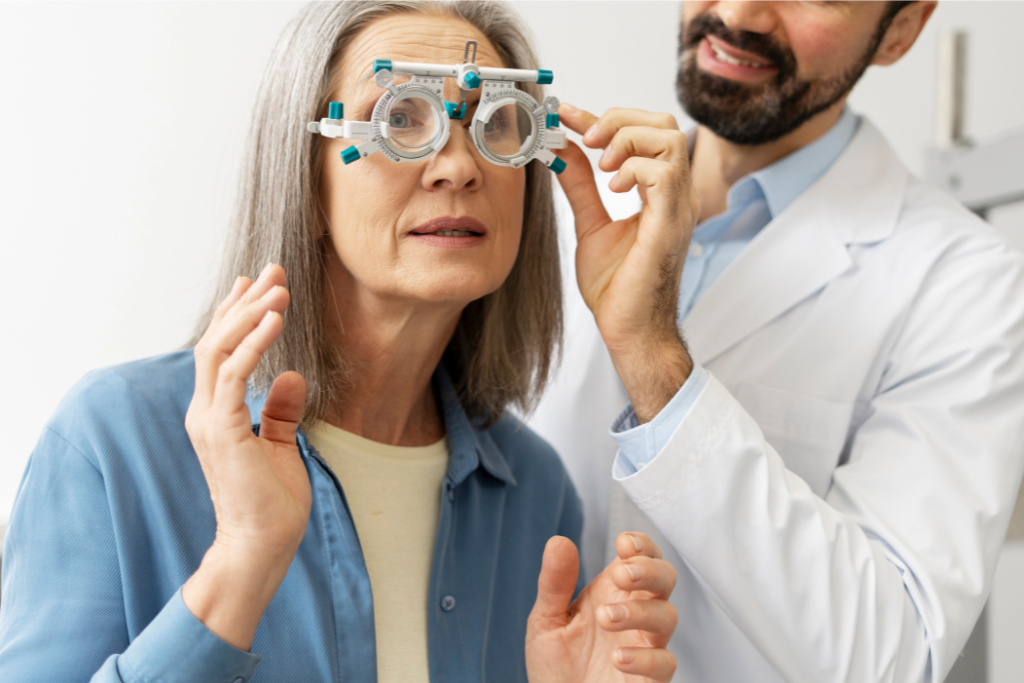
Noticing blurry vision lately? You might find yourself squinting at the morning newspaper, turning up the brightness on your smartphone, or feeling like the world just isn’t as crisp as it used to be. For most people in their 50s and 60s, the immediate reaction is to shrug it off as just part of getting older.
However, assuming blurred vision is merely an inevitable byproduct of time is a misconception that could cost you your visual clarity. The eyes do change as we age, but there is a significant difference between normal aging vision and the onset of cataracts.
Cataracts are one of the most common causes of vision loss worldwide, yet because they develop so gradually, they are often overlooked or misattributed to other factors.
If you live in Southern California, understanding the early signs of cataracts vs normal aging vision is the first step toward reclaiming your sight. At Soroudi Advanced LASIK & Eye Centers, we specialize in the early detection and precision treatment of cataract symptoms. Here’s what you need to know:
What Are Cataracts?
Inside every human eye is a natural lens. In a healthy young eye, this lens is crystal clear, functioning much like the lens of a high-end camera. It focuses light onto the retina at the back of the eye, producing sharp, vibrant images.
A cataract occurs when the proteins in this natural lens begin to clump together. Over time, these clumps grow, causing the lens to become cloudy, opaque, or yellowed.
This is why the most common analogy for cataracts is like looking through a foggy or frosted window. As the fog thickens, less light reaches the retina, and the light that does get through is scattered, leading to the vision problems that characterize the condition.
The key takeaway is that cataracts develop gradually. They don’t appear overnight, which is precisely why so many people fail to realize they have them until their quality of life has already significantly declined.
Also Read: How Cataracts Affect Your Vision & When to Seek Treatment
Why Blurry Vision Isn’t Always Caused by Normal Aging
It is true that aging affects the eyes. Most people develop presbyopia in their 40s, the loss of near-focusing ability that leads to the need for reading glasses. This is a normal age-related change. However, blurred vision not caused by aging (or rather, not by normal aging) often points to a pathological change, such as a cataract.
- Normal Aging (Presbyopia): With presbyopia, you struggle to see things up close, but your distance vision remains clear, and colors remain bright. Your vision can usually be corrected perfectly with a standard pair of reading glasses.
- Cataracts: This is a progressive condition that causes visual distortion. It isn’t just about focus; it’s about clarity. No matter how much you clean your glasses or how strong your prescription is, the haze remains.
Understanding this difference between cataracts and age-related vision changes is vital for knowing when to seek professional help.
7 Early Signs of Cataracts Most People Miss
Knowing how to tell if you have cataracts early requires paying close attention to subtle shifts in your visual perception. Here are seven warning signs that often go unnoticed:
1. Persistent Blurry or Cloudy Vision
If you feel like there is a film over your eyes that you can’t blink away, this is a hallmark sign. Unlike the blurriness of nearsightedness, which can be corrected with a lens, cataract blurriness feels internal. If you’ve recently updated your prescription but find that your vision still feels off, it’s time for a cataract symptoms and diagnosis in Beverly Hills.
2. Increased Sensitivity to Light & Glare
Do bright sunny days in Beverly Hills suddenly feel painful? Cataracts scatter the light entering the eye rather than focusing it. This makes bright indoor lighting or direct sunlight feel overwhelming and can cause significant discomfort.
3. Difficulty Seeing at Night
One of the first places cataracts interfere with daily life is behind the wheel. If you find yourself avoiding driving after dark because the road feels too dim or you can’t distinguish objects in the shadows, you are likely experiencing a common cataract symptom.
4. Halos Around Lights
When light hits a cloudy lens, it diffracts. This often creates “halos“, which are bright rings that appear around headlights, streetlamps, or candles. If oncoming traffic looks like a series of glowing orbs, your cataracts may be progressing.
5. Faded or Yellowed Colors
Because the lens of the eye turns yellow or brown as a cataract develops, it acts like a literal filter. You might not notice it at first, but over time, blues may look green, and whites may look dingy or yellowed. Many patients are shocked after cataract surgery to realize just how vibrant the world actually is.
6. Frequent Prescription Changes
Are you visiting your optometrist every six months for stronger glasses? This “second sight” phenomenon, where your near vision suddenly improves while your overall clarity drops, is a classic sign that the lens is changing shape and density due to cataract growth.
7. Double Vision in One Eye
While double vision can be caused by many factors, monocular diplopia (double vision in just one eye) is often due to irregular clouding of the lens. If you see two of everything, even when one eye is covered, it is a significant red flag.
Also Read: Understanding Cataract Progression: What to Expect
Who Is at Risk (Even Earlier Than You Think)?
Although we often associate this condition with aging eyes, there are many causes of cataracts beyond aging. Understanding your risk profile is essential for proactive eye health. Here’s who is most at risk for cataracts:
- Diabetes: High blood sugar can alter the lens’s structure.
- UV Exposure: Years of sun exposure without proper eye protection can accelerate lens clouding.
- Lifestyle Factors: Smoking and excessive alcohol consumption are linked to earlier cataract development.
- Medications: Long-term use of corticosteroid medications can trigger cataracts.
- Previous Eye Injury: Trauma to the eye can cause a traumatic cataract years after the initial incident.
When to See an Eye Specialist
If your vision is interfering with your ability to read, drive, or enjoy your hobbies, you should not wait. Cataract surgery in Beverly Hills has evolved into a highly sophisticated procedure, but it all starts with a diagnosis. You should schedule an appointment if:
- Night driving is becoming stressful or dangerous.
- Your glasses no longer seem to help you see clearly.
- You experience a sudden change in your vision.
At Soroudi Advanced LASIK & Eye Centers, we use advanced diagnostic technology to map the density and location of your cataracts, providing a level of precision that standard screenings might miss.
How Cataracts Are Diagnosed & When It’s Time for Surgery
Cataract symptoms and diagnosis in Beverly Hills at our center are a quick, painless, and highly accurate process. It typically involves:
- Visual Acuity Test: Measuring how well you see at various distances.
- Slit-lamp Examination: Using a high-powered microscope to look at the structures of the front of your eye.
- Dilated Eye Exam: Allowing the doctor to examine the lens and the retina for any concurrent issues.
In the early stages, cataracts can often be managed with stronger lighting and new eyeglass prescriptions. However, when blurred vision from cataracts inhibits your independence, surgery becomes the most effective solution.
Modern cataract surgery is an outpatient procedure with a remarkably high success rate. We remove the cloudy lens and replace it with a clear, synthetic Intraocular Lens (IOL). The procedure is fast, and the recovery is typically very quick, with many patients returning to their normal routines within a day or two.
Leaving cataracts untreated leads to a diminished quality of life. Research shows a direct link between untreated vision loss and increased risks of falls, social isolation, and even cognitive decline. The earlier the diagnosis, the more treatment options you have and the sooner you can return to a life of visual clarity.
Also Read: Do You Really Need Cataract Surgery in Both Eyes? Here’s How It Works
Expert Cataract Surgery in Beverly Hills
The most important thing to remember is that you know your eyes better than anyone else. If something feels different, don’t dismiss it. Subtle changes in how you perceive light, color, and depth are your eyes’ way of asking for help.
Ready to see the world with clarity and confidence again? Don’t let cataracts dim your outlook. Schedule your comprehensive cataract evaluation at Soroudi Advanced LASIK & Eye Centers today.