
Why Comprehensive Eye Exams Matter

The goal of a comprehensive eye exam is early detection of eye diseases and vision problems, often before noticeable symptoms develop. For adults, children, and aging individuals alike, routine eye exams safeguard vision and can reveal signs of systemic diseases, such as diabetes and hypertension, which manifest in the eye. 

In Los Angeles, where access to specialized medical care is high, choosing an ophthalmology-led evaluation ensures you benefit from the highest level of medical training, diagnostic technology, and expertise in treating complex eye conditions.

What Is a Comprehensive Eye Exam?

A comprehensive eye exam is a medical procedure designed to evaluate the total health of the eye, visual system, and related structures. It goes significantly beyond a basic vision screening, which only checks visual acuity.

Role of an Ophthalmologist vs. an Optometrist

Ophthalmologist
(M.D. or D.O.)

A medical doctor specializing in eye and vision care. They are licensed to provide comprehensive eye exams, diagnose and treat all eye diseases, perform eye surgery, like cataract or LASIK, and prescribe glasses and contact lenses. For individuals with complex medical conditions or those requiring surgery, an ophthalmologist offers the deepest level of care.

Optometrist
(O.D.)

A healthcare professional who provides primary vision care, including comprehensive eye exams, vision testing, prescribing and dispensing corrective lenses, and diagnosing certain eye conditions like dry eye and prescribing some medications. They refer patients to ophthalmologists for complex cases or surgical needs.

What Happens During a Comprehensive Eye Exam?

Medical and Vision History Review

  • Family History: History of glaucoma, macular degeneration, or other eye conditions in relatives.

  • Medication Review: Systemic medications that may have ocular side effects.

  • Symptom Check: Discussing any current changes in vision, headaches, eye strain, or discomfort.

Visual Acuity Testing

This test measures the sharpness and clarity of your vision, usually using the Snellen chart, the familiar chart with letters of decreasing size. The result is expressed as a fraction, such as 20/20 (normal vision) or 20/40.

Refraction Assessment

This process determines the precise lens power needed to correct refractive errors. The doctor uses a phoropter to present a series of lens choices, asking, “Which is clearer, one or two?” to fine-tune your prescription for glasses or contacts.

Eye Pressure Testing (Tonometry)

This test measures the intraocular pressure (IOP), a primary screening tool for glaucoma. The most common method involves applying special eye drops, followed by a small burst of air or a touch of a specialized instrument to the eye’s surface.

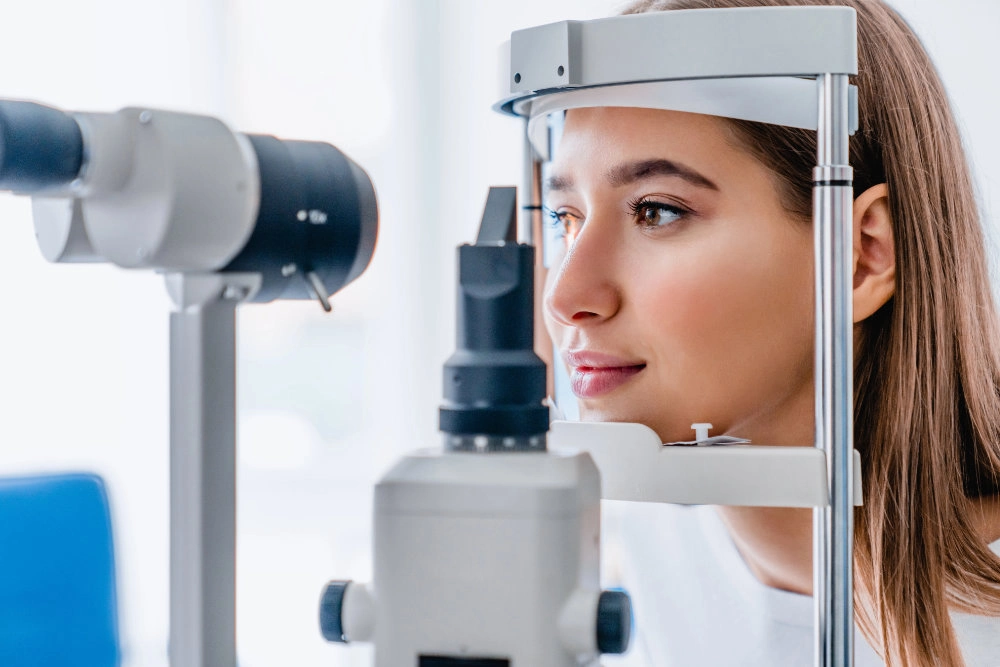
Slit-Lamp Examination

The slit-lamp is a powerful, low-power microscope that allows the ophthalmologist to examine the anterior segment of the eye in detail, including the:

  • Cornea

  • Lens

  • Iris

  • Eyelids

  • Tear film

Dilated Fundus Exam

Dilating eye drops temporarily widen the pupil, giving the doctor a clear, magnified view of the posterior segment of the eye, which includes the:

  • Retina: The light-sensitive tissue lining the back of the eye.

  • Optic Nerve: The nerve that transmits visual information to the brain.

  • Retinal Blood Vessels: Necessary for detecting signs of systemic disease like hypertension and diabetes.

Advanced Imaging (When Indicated)

Dilating eye drops temporarily widen the pupil, giving the doctor a clear, magnified view of the posterior segment of the eye, which includes the:

  • Optical Coherence Tomography (OCT): Provides high-resolution cross-sectional images of the retina and optic nerve, for monitoring glaucoma and macular degeneration.

  • Corneal Mapping (Topography): Creates a 3D map of the cornea's surface curvature, necessary for contact lens fitting and detecting conditions like keratoconus.

  • Retinal Photography: Takes high-definition photos of the back of the eye to document the current state of the retina and optic nerve for future comparison.

Conditions a Comprehensive Eye Exam Can Detect

Refractive Errors

  • Nearsightedness: Difficulty seeing distant objects clearly.

  • Farsightedness: Difficulty seeing close objects clearly.

  • Astigmatism: Blurred vision at any distance due to an irregularly shaped cornea.

  • Presbyopia: Age-related loss of near focusing ability, usually starting after age 40.

Dry Eye and Ocular Surface Disease

Common in the dry LA climate and exacerbated by prolonged screen time, this condition is assessed by the exam, which evaluates the quantity and quality of the tear film.

Glaucoma

Often called the “silent thief of sight,” this group of diseases damages the optic nerve, typically due to elevated eye pressure. It often presents without symptoms in the early stages, making routine tonometry and optic nerve evaluation essential for early treatment and the prevention of irreversible vision loss.

Cataracts

A clouding of the natural lens of the eye that causes blurry vision and glare. It is easily detected during the slit-lamp exam and is highly treatable with surgery.

Macular Degeneration (AMD)

Damage to the macula, the central part of the retina, leads to loss of central vision. Early signs are visible through a dilated exam and OCT.

Diabetic Eye Disease

Damage to the retinal blood vessels caused by high blood sugar. It is the leading cause of blindness in working-age adults, yet it is preventable with yearly dilated exams and proper medical management.

Retinal Tears or Detachments

Potentially sight-threatening emergencies can be detected during the dilated examination, enabling immediate treatment.

Keratoconus and Corneal Disorders

Keratoconus is a condition where the cornea thins and bulges into a cone shape, which is detected via corneal mapping.

Systemic Health Issues Visible in Eye Exams

The eye is the only place in the body where a doctor can directly view the live, small blood vessels and nerves. Changes can indicate:

  • Hypertension (High Blood Pressure)
  • Diabetes
  • Autoimmune Conditions (e.g., lupus, rheumatoid arthritis)

Comprehensive Eye Exams for Different Age Groups

Children and Teens

  • Importance: Early detection is important for learning, which is up to 80% dependent on vision. Uncorrected problems such as lazy eye or an eye turn can lead to permanent vision loss if not treated early.

  • Focus: Checking for alignment, focusing ability, and any refractive errors that can impact school performance.

Adults 20–40

  • Focus: Monitoring stable or changing refractive errors, addressing digital eye strain from prolonged screen use, and checking for early signs of dry eye.

Adults Over 40

  • Focus: Managing presbyopia, the need for reading glasses, and increased screening for glaucoma and cataracts, which typically begin to develop around this age.

Adults Over 60

  • Focus: More frequent monitoring for age-related degenerative conditions like macular degeneration and ensuring good vision to mitigate fall-risk issues.

How Often Los Angeles Residents Should Get an Eye Exam

Risk Profile

Recommended Frequency

No Risk Factors (Ages 18-60)

Every 2 years

Age 65 and Older

Every 1 year

Diabetics

Every 1 year, or as recommended by the doctor

Glaucoma Suspects/Family History

Every 1 year, or as recommended by the doctor

Contact Lens Users

Every 1 year

Chronic Eye Condition (e.g., Dry Eye)

Every 1 year, or as recommended by the doctor

Heavy UV exposure in Los Angeles necessitates regular checks for cataracts and retinal damage. High allergen counts can contribute to chronic ocular surface issues like dry eye and conjunctivitis.

Blonde woman with blue eyes smiling

Comprehensive Eye Exams for Contact Lens Wearers

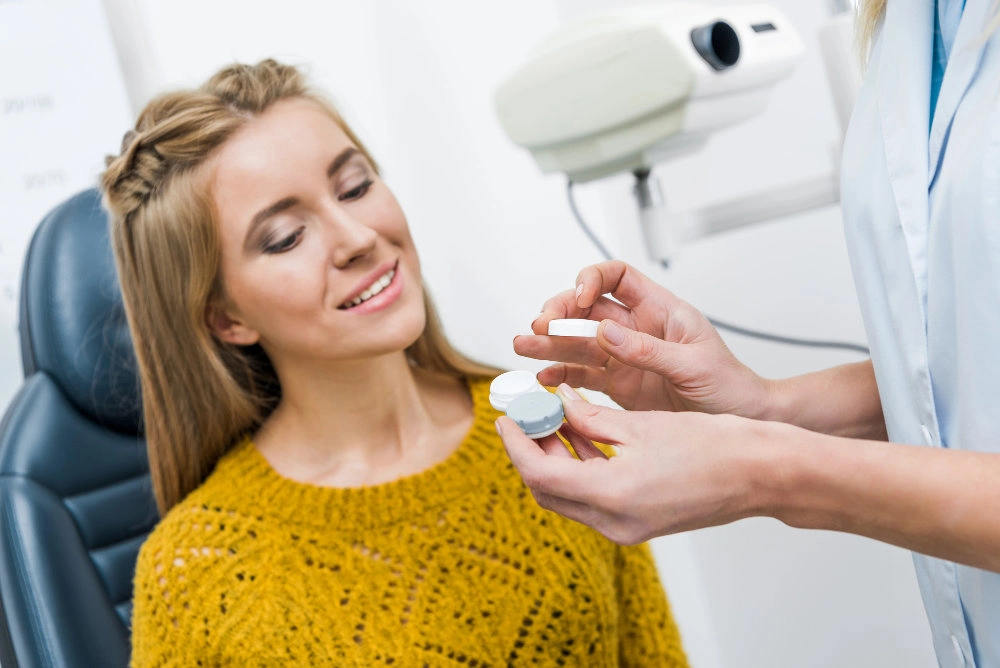
Contact lens wearers require an annual comprehensive exam plus a dedicated contact lens fitting appointment. These visits include additional measurements of the corneal curvature and a detailed slit-lamp evaluation of the cornea to check for:

  • Proper lens fit and movement
  • Signs of oxygen deprivation or infection
  • Early complications that can compromise long-term corneal health

Technology Used in a Los Angeles Comprehensive Eye Exam

Leading Los Angeles ophthalmology practices utilize advanced, noninvasive technology to ensure the most precise diagnosis and customized treatment plan.

  • Automated Refractors for an objective starting point of your prescription.

  • High-Definition OCT for mapping the optic nerve and macula at the cellular level.

  • Wide-Field Retinal Imaging to capture a comprehensive view of the entire retina without extensive dilation.

Choosing the Best Ophthalmologist in Los Angeles for a Comprehensive Exam

Board Certification

Ensure that the physician is board-certified by the American Board of Ophthalmology (ABO).

Subspecialty Training

If you have a specific condition, look for fellowship-trained specialists.

Access to Advanced Technology

The presence of tools, such as OCT and retinal photography, indicates a commitment to advanced, modern diagnostics.

Experience with Complex Cases

A well-established LA practice should have extensive experience managing conditions like advanced cataracts, high-risk glaucoma, and diabetic retinopathy.

Insurance and Vision Plan Considerations

Confirm the provider accepts your specific medical insurance and/or vision plan to minimize out-of-pocket costs.

Insurance and Cost Considerations for Eye Exams in Los Angeles

Vision Plans
(VSP, EyeMed, etc.)

Typically cover routine vision exams for a low copay, focusing on determining a prescription for glasses/contacts and basic eye health screening.

Medical Insurance
(PPO, HMO, etc.)

Covers the cost of a medical eye exam when there is a diagnosis, symptom, or treatment of a disease.

If your exam involves the diagnosis or management of a medical condition, it will likely be billed to your medical insurance. Be sure to clarify with the office what is covered under your plan, as specialized tests like OCT or contact lens fittings may incur additional costs. Without insurance, the cost of a routine comprehensive eye exam in Los Angeles generally ranges from $75 to $250, with specialized testing adding $50–$100 per test.

Preparing for Your Appointment

What to Bring

A list of all current medications, including doses, and all current corrective eyewear.

Expectation About Dilation

Dilation typically lasts for 4–6 hours, causing light sensitivity and blurred near vision.

Driving

You will likely need a driver if your pupils are dilated, as driving immediately afterward can be difficult and unsafe.

Questions

Prepare a list of questions for your ophthalmologist about your vision goals, specific concerns, or potential treatment options.

FAQs

A comprehensive exam, including the time required for pupil dilation, generally takes 60 to 90 minutes.

Not always, but it is highly recommended annually, especially for individuals over 40, those with systemic health conditions, or anyone with known eye disease risk factors. Many advanced practices may use wide-field imaging to screen for issues without dilation, but dilation still provides the most comprehensive view.

A vision exam is a routine check for corrective lens prescriptions. A medical eye exam is performed to diagnose, manage, or treat a specific disease, such as dry eye, cataracts, or glaucoma. The distinction often determines whether your visit is covered by your vision plan or your medical insurance.

Yes. Ophthalmologists can detect signs of systemic diseases like hypertension, diabetes, and high cholesterol by examining the blood vessels and nerves in the retina.

If you have a chronic disease like diabetes, a family history of glaucoma or macular degeneration, or are experiencing symptoms of a serious eye problem, you should see an ophthalmologist for their medical and surgical expertise. For routine checks and prescription updates, an optometrist is typically sufficient.

Conclusion

A routine, comprehensive eye exam is the best step you can take to protect your vision for the long term. By choosing a trusted Los Angeles ophthalmologist who provides thorough, high-tech evaluations, you are securing the earliest detection and best possible treatment for any emerging condition.

Don’t wait for symptoms to appear; contact Soroudi Advanced LASIK & Eye Centers to take charge of your eye health today.

Contact us media
Accessibility: If you are vision-impaired or have some other impairment covered by the Americans with Disabilities Act or a similar law, and you wish to discuss potential accommodations related to using this website, please contact our Accessibility Manager at (310) 474-2010.
Contact Us