Many people assume that changes to their eyelids are simply a part of growing older that affects their appearance. It is a common misconception that drooping skin or puffiness around the eyes is strictly a cosmetic concern. However, the position of your eyelids plays a significant role in how much of the world you can actually see.
Because these changes happen slowly over several years, subtle vision shifts often go unnoticed. You might find yourself adjusting your posture or moving your head differently without realizing why. There is a direct connection between eyelid position and your visual field; when the skin hangs too low, it acts like a literal curtain over your line of sight.
What Happens to Eyelids With Age
The structures around our eyes are some of the most delicate on the body. Over time, several biological factors change how the lids sit on the face.
- Loss of skin elasticity: The body produces less collagen and elastin as we age. This causes the skin on the upper lids to become thin and stretched, eventually folding over itself.
- Weakening of eyelid muscles: The levator muscle, which is responsible for lifting the upper lid, can stretch or detach slightly from its attachment point.
- Fat redistribution around the eyes: The protective fat pads that cushion the eye can shift forward, causing a heavy or bulging look that adds weight to the lid.
- Gravity’s effect over time: Continuous downward pull over decades eventually takes a toll on tissue that is already losing its natural support.
Also Read: Eye Health Over 40: Why a Yearly Ophthalmologist Visit Matters
How Drooping Lids Impact Peripheral Vision
Peripheral vision is what allows you to see things out of the corner of your eye while looking straight ahead. When the upper lid sags, it begins to block this side vision first. You might not notice a black spot, but rather a general blurring or darkening of the upper and outer edges of your sight.
This reduced field of view makes it harder to see objects located above you or to your sides. To compensate for this, many people develop an increased need to tilt their head back or constantly raise their eyebrows. This constant lifting is an unconscious attempt to pull the excess skin away from the pupil to let more light in.
Early Signs Patients Often Miss
Many individuals attribute vision struggles to old eyes or a need for a new glasses prescription, missing the fact that their lids are the cause.
- Heavy feeling around the eyes: By the end of the day, your eyes may feel weighted down or tired, as if you are struggling to keep them open.
- Brow fatigue or tension headaches: Constantly using your forehead muscles to lift your lids can lead to chronic brow-line aches or headaches.
- Trouble reading street signs: If you find yourself needing to lift your chin to see signs hanging over the road, your lids may be obstructing your upward view.
- Difficulty driving, especially at night: Reduced light entry makes it harder to spot pedestrians or vehicles merging from the side.
- Needing to lift lids with fingers: If you instinctively pull the skin up at the temples to see better while reading or watching television, it is a clear sign of a functional issue.
Real-Life Effects on Daily Activities
A restricted visual field changes how you interact with your environment. Driving safety concerns are among the most serious, as the inability to see a car in the next lane or a cyclist at an intersection increases the risk of collisions.
Navigating physical spaces also becomes harder. Challenges with stairs and uneven ground arise because you cannot see your feet and the horizon at the same time without tilting your head. This can lead to missteps or falls. Additionally, constant eye strain during reading or screen use can make work or hobbies less enjoyable. Over time, these limitations can result in lower confidence in mobility, leading some people to stay home more often.
How Eye Doctors Evaluate Eyelid-Related Vision Loss
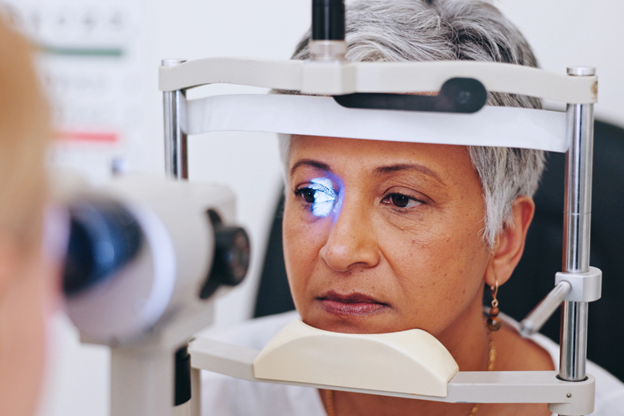
If you suspect your lids are affecting your vision, a specialist will perform a specific series of tests.
- Visual field testing: This involves a machine that maps out exactly where you can and cannot see. The test is often performed twice: once with the eyelids in their natural resting state and once with the excess skin taped up, to measure the difference.
- Eyelid measurements: The doctor measures the distance from your pupil to the edge of your eyelid to see if it falls below a specific mark.
- Photographic documentation: Photos are taken from the front and side to show how the skin rests on the eyelashes or blocks the pupil.
- Functional vs cosmetic distinction: Doctors look for evidence that the sagging is causing physical symptoms or safety risks rather than just a change in looks.
When Treatment Becomes Medically Necessary
There is a clear distinction between eyelid surgery as an elective choice and a medical requirement. Insurance providers typically have specific thresholds for functional impairment. If the visual field test shows that a significant percentage of your vision is blocked, the procedure may be covered.
Documenting vision obstruction is a key part of this process. Once the doctor gathers sufficient data indicating that the lid position poses a safety hazard or prevents you from performing daily tasks, they will provide a referral to a specialist. This ensures that the focus remains on restoring your sight.
Treatment Options
For those with mild drooping, non-surgical management, like specialty eye drops that temporarily lift the lid muscle, might be used. However, for most functional cases, a surgical approach is the standard.
Blepharoplasty for functional improvement is a procedure that removes the excess skin and fat from the upper lids. The surgery involves a small incision hidden within the natural fold of the lid, where the doctor trims away the tissue blocking the sight.
The recovery timeline is usually shorter than most people expect. While there is some bruising and swelling for the first week or two, most patients return to normal activities quickly. The result is a much clearer, wider view of the world.
Also Read: Can Eyelid Surgery Improve Vision?
Benefits Beyond Appearance
- Expanded field of vision: You will notice immediately that the ceiling of your vision has been lifted, making rooms feel brighter and more open.
- Reduced eye strain: Since you no longer have to fight to keep your eyes open, the tension in your forehead and temples often disappears.
- Improved safety: Better peripheral awareness makes driving, walking, and exercising much safer.
- Better quality of life: Being able to see clearly without physical effort makes every daily task easier and more comfortable.
Why Early Evaluation Matters
Waiting until you can barely see is not the best approach. Identifying functional decline early can help prevent accidents, such as slips or driving mishaps. It also helps you avoid unnecessary strain that can lead to chronic headaches or fatigue.
By seeking a professional opinion now, you can begin planning treatment before the vision loss becomes severe. Understanding the health of your eyelids is a part of maintaining your sight as you age.
Conclusion
It is easy to dismiss sagging skin as a vanity issue, but aging eyelids affect more than looks. Because these vision changes can be gradual, you might not realize how much you have lost until you are tested. Small shifts in the lid position can have a significant impact on your safety and your ability to navigate the world. Ultimately, clear sight supports independence. Taking care of your eyelids is taking care of your vision.
If you feel your eyelids are heavy or you are struggling to see clearly out of the corners of your eyes, it is time for a professional check-up. Contact Soroudi Advanced LASIK & Eye Centers today to schedule a consultation and find out how we can help you see the world more clearly.