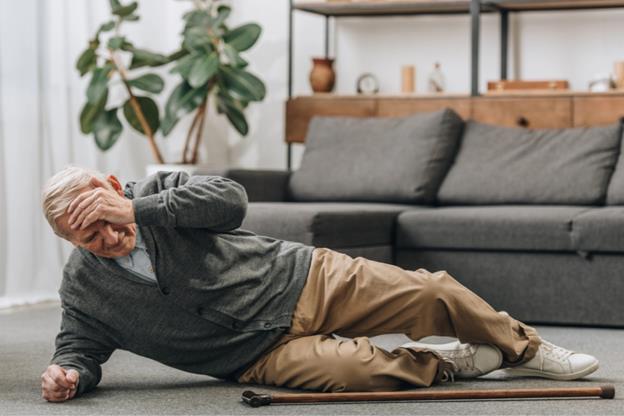
Most people view cataracts as a simple nuisance of aging. However, the real danger is often hidden. This shift turns a vision problem into a significant safety concern.
The brain relies on steady data from the eyes to maintain upright posture and steady movement. When cataracts cloud the lens and prevent the brain from accurately calculating where your feet are in relation to the ground. This quiet erosion of visual data makes it harder to stay steady, even if you feel like you are walking carefully.
There is a direct connection between the clouding of the eye lens and the likelihood of a trip or stumble. Because the change happens slowly, many people adapt their gait or posture without realizing why. They attribute their shakiness to getting older, missing the fact that their eyes are providing a distorted map of their surroundings. Addressing the eyes is often the quickest way to stabilize movement.
How Cataracts Change the Way You See
Instead of light hitting the back of the eye clearly, it scatters. This creates a hazy view of the world where objects lack sharp borders. When you cannot see the distinct start and end of an object, you are more likely to misplace your footing.
Contrast is what allows you to see a white curb against a gray sidewalk. Cataracts wash out these differences, making everything look flat. When different surfaces blend together, the environment becomes a series of traps. Cataracts scatter incoming light, creating a halo effect. Bright sunlight or oncoming headlights can temporarily blind you, leaving you vulnerable during those seconds of recovery.
The ability to move from a sunny porch into a dim living room requires the eyes to adjust quickly. Cataracts slow this process significantly. For several moments, you may be walking into a room while essentially blind, which is when most household trips occur.
The lens of the eye yellows as a cataract develops. This acts like a sepia filter, making colors look dull or brownish. While this seems harmless, it makes it harder to distinguish color-coded safety markers or different types of flooring.
Why These Changes Increase Fall Risk
Navigating a staircase requires precise visual data. If you cannot see the edge of a step clearly, you might overstep or understep. This lack of visual definition is a leading cause of hospitalizations related to household accidents.
Nature is rarely flat. Tree roots, cracked pavement, and rugs all present edges. When your vision is clouded, these hazards disappear into the background. You cannot avoid what you cannot see, making every walk a gamble.
Depth perception depends on both eyes sending clear, matching images to the brain. If one eye has a thicker cataract than the other, the brain struggles to merge the images. This leads to reaching for a handrail that is inches further away than it looks.
When you don’t trust your eyes, you start to move differently. You might shuffle your feet or look down constantly. Ironically, this loss of confidence makes you more prone to losing your balance, as you are no longer moving with a natural, steady rhythm.
Everyday Situations That Become Risky
The repetitive patterns on escalators can be disorienting for someone with poor contrast sensitivity. Similarly, descending stairs in a dim stairwell becomes a high-risk activity when the tread edges are invisible.
Low-light areas are particularly dangerous. Cataracts limit the amount of light reaching the retina. In a parking garage, shadows can look like holes, and real obstacles can hide in the darkness, increasing the risk of a trip.
The combination of low light and the glare from streetlamps makes nighttime the most dangerous time for cataract patients. The starburst effect from lights can be overwhelming, making it impossible to see a pedestrian or a pothole.
Rain creates reflections that further confuse a clouded eye. On an uneven sidewalk, the lack of shadows or highlights on the pavement means you might not see a slope or a dip until you feel your ankle turn.
Leaving a building on a sunny day can cause momentary blindness for someone with cataracts, increasing the risk of missing a step or a curb.
Who Is Most Vulnerable
As we age, our bones become more fragile. A fall that a younger person might walk away from can result in a life-changing fracture for an older adult. Because cataracts are so common in this age group, they are a primary driver of injury.
If you already deal with inner-ear issues or muscle weakness, you rely even more on your eyes to stay upright. When your vision fails, your backup system for balance is gone, making a fall almost certain.
Diabetes can affect both the eyes and the nerves in the feet. If you cannot feel the ground clearly due to neuropathy and you cannot see the ground clearly due to cataracts, your safety is severely compromised.
For those living alone, a fall is not just a physical injury; it is a threat to their ability to remain in their own home. Without someone to assist or spot hazards, the risk of vision loss is magnified.
Fear of falling often leads people to stay seated and move less. This lack of activity weakens the muscles, thereby increasing the risk of a fall. It is a cycle that often starts with declining vision.
Early Signs Patients Often Dismiss
If you find yourself dragging a lamp closer or needing the big light on just to see a magazine, your lens is likely thickening. This is often the first sign that light is not reaching your retina as it should.
Do you reach for the wall when walking down a hallway at night? If you feel dizzy or unsure of your footing only when the lights are low, the problem likely isn’t your inner ear; it’s your eyes.
Many patients subconsciously change their lifestyle. They stop going to dinner with friends or stay on the first floor of their home. If you are shrinking your world to avoid tricky spots, it is time for an evaluation.
Frequent bruises on your shoulders or hips from grazing doorframes or furniture are a major red flag. This shows that your brain is miscalculating the width of openings or the location of objects.
Commonly called furniture surfing, this habit is a clear sign that your visual system is no longer providing the stability you need to walk freely.
How Eye Doctors Evaluate Vision-Related Fall Risk
This is the standard letter-chart test. It measures how well you see at a distance, which is the first step in understanding how much the cataract is blocking your sight.
Doctors use specialized charts where the letters gradually fade into the background. This is a much better predictor of fall risk than a standard eye test because it simulates real-world conditions such as fog or dim light.
By shining a light into the eye while you read a chart, the doctor can see how much your vision degrades in bright conditions. This explains why you might struggle on sunny days or while driving at night.
A good evaluation involves talking about your life. The doctor will ask whether you have trouble with curbs, have stopped driving at night, or feel nervous on stairs.
The focus is on how you live. If you can no longer garden, walk the dog, or navigate your kitchen safely, the cataract has moved beyond a vision issue and into a lifestyle crisis.
Also Read: 10 Questions to Ask Your Cataract Surgeon in Los Angeles
When Cataract Treatment Becomes More Than Visual
Surgery is considered when you can no longer perform your daily tasks. If your vision is preventing you from working or caring for yourself, the medical necessity is clear.
If you have already had a near miss or a minor trip, the conversation changes. Preventing a broken hip is a much higher priority than simply making colors brighter. Most providers recognize that cataracts are a medical condition. When vision loss interferes with safety and mobility, the case for intervention is strong and well-supported by medical data.
How Cataract Surgery Reduces Fall Risk
Surgery replaces the cloudy lens with a clear one. Suddenly, the edges of curbs and the texture of the ground become visible again, giving the brain the data it needs to coordinate movement.
When both eyes are clear, they work together to create a 3D map of the world. You can accurately judge how far away a step is or how deep a puddle might be.
With clear sight, you recognize hazards instantly. You can step over a rug or avoid a wet spot without having to stop and stare, allowing for a more natural and safe walking pace.
Once the world is sharp again, the shuffle disappears. Patients tend to walk taller and faster, which actually improves their physical balance and muscle tone.
Studies show that patients who have cataract surgery have a significantly lower rate of hip fractures and ER visits. It is one of the most successful ways to protect your physical safety as you age.
Also Read: Cataract Surgery Timeline: From Evaluation to Clear Vision in Los Angeles
Why Early Evaluation Matters
You do not want to wait for a fall to realize your vision was the problem. Addressing cataracts early means you never have to deal with the recovery from a broken bone.
The ability to drive, shop, and walk through your neighborhood is tied to your sight. Keeping your vision sharp is the best way to ensure you don’t have to rely on others for basic needs.
When you see clearly, you move more. Staying active keeps your heart healthy and your muscles strong, which provides a secondary layer of protection against falls.
Vision is the lead driver of how we move. By taking care of your eyes now, you are investing in your ability to stay mobile and active for years to come.
Conclusion
It is easy to categorize this condition as just blurry vision, but its impact extends to every aspect of your physical life. It changes how you stand, how you walk, and how you interact with your home. A slight yellowing of the lens or a bit of glare might seem minor, but in the wrong setting, like a dark stairwell, it can be life-altering.
If you or a loved one has noticed a change in balance or a fear of walking in dim light, it is time to look at the eyes. Contact Soroudi Advanced LASIK and Eye Centers today to schedule a consultation.