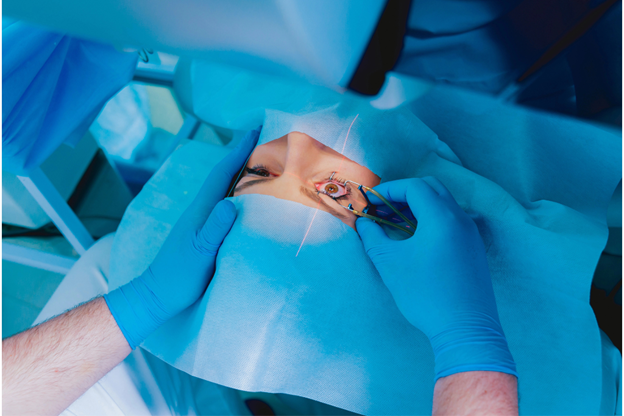
For years, the image of a typical LASIK patient was someone in their twenties or thirties looking to ditch their glasses before starting a career or traveling the world. Because of this, many people assume that once they hit the big 4-0, the window for laser vision correction has slammed shut. They worry that their eyes are already too old or that the natural changes coming their way will simply undo any work a surgeon performs.
Common concerns about aging eyes often center on long-term results. You might notice that while your distance vision is okay, the menu at dinner is getting harder to read. This leads to the question patients over 40 often ask: “Is it still worth it?” If you need glasses anyway, is the investment of time and resources in LASIK a wise move? The answer is more positive than most people expect, but it requires a different way of looking at how we see.
What Changes in Your Eyes After 40
The primary shift that happens around this age is the onset of presbyopia. This is not a disease or a flaw in the shape of your eye; it is a natural part of the aging process. Inside the eye, the lens becomes less flexible. When you are young, this lens is soft and changes shape easily, helping you focus on things up close. As you age, that lens hardens.
This loss of flexibility causes shifts in near and distance vision. Even if you have had perfect vision your whole life, you will likely find yourself holding your phone further away. This is why many individuals eventually need reading glasses. Though these changes affect your visual needs and how you focus, they do not necessarily mean your eye health is declining. Your corneas, the part of the eye that LASIK reshapes, usually remain healthy and stable well into your senior years.
What LASIK Can and Cannot Correct
To understand if LASIK is right for you, you have to know what the laser actually does. LASIK is excellent for improving distance vision. If you are nearsighted, farsighted, or have an astigmatism, the laser reshapes the cornea to help light land correctly on the retina.
However, there are near-vision limitations after 40, and there is a massive difference between refractive error and age-related focus loss. LASIK fixes the shape of the eye and refractive error, but it cannot soften a hardened internal lens, such as presbyopia. Setting realistic expectations is the most important part of the process. If you have LASIK to fix your distance vision, you will likely still need reading glasses for fine print because the internal lens is still aging.
Also Read: Can LASIK Fix Astigmatism? What LA Patients Should Know
LASIK Options Designed for Patients Over 40
Surgeons have developed ways to address these age-related changes. One popular method is Monovision LASIK. In this procedure, the surgeon corrects your dominant eye for distance and leaves your non-dominant eye slightly nearsighted to help with close-up work. Your brain learns to blend these images together.
There are also blended vision treatments that provide a smoother transition between different focal points. Modern clinics use custom treatment planning to determine which balance works best for your brain, eye health, and habits. This allows surgeons to build outcomes based on your lifestyle, whether you spend all day on a computer or outdoors.
Who Is a Good Candidate at 40+
Being a candidate at 40 or 50 is similar to being one at 25, with a few extra checks. First, you need a stable prescription. If your vision is still swinging wildly every six months, it is best to wait. You also need healthy corneas with enough thickness to safely undergo the procedure.
Doctors will check to make sure there is no advanced eye disease, such as glaucoma or significant cataracts. Lifestyle considerations play a big role here, too. Your work and hobby needs dictate the plan. A pilot needs perfect distance vision above all else, while a jeweler might prioritize near vision.
Benefits LASIK Still Offers Later in Life
Even with occasional reading glasses, the benefits of LASIK in your 40s and 50s are significant. The biggest draw is reduced dependence on glasses for most of your day. Imagine driving, watching a movie, or playing sports with clear distance vision without fumbling for frames.
It makes travel and daily routines much easier. You won’t have to worry about losing your glasses on a hike or fogging up your lenses when you walk into a warm room. Many patients report improved confidence and convenience, leading to long-term gains in quality of life. You are reclaiming the freedom of movement you had in your younger years.
Also Read: The Top 5 Benefits of LASIK Eye Surgery You May Not Know
Common Concerns Patients Over 40 Have
Will I still need reading glasses?
Possibly. If you choose full distance correction in both eyes, you will almost certainly need them for reading. If you choose monovision, you may rarely need them.
Will my vision keep changing?
Your distance prescription usually stays stable after LASIK, but the internal zoom of your lens will continue to weaken until your mid-60s.
Is it too late?
As long as your eyes are healthy and you don’t have significant cataracts, it is rarely too late to improve your sight.
Is LASIK safe at my age?
The safety profile for older adults is very similar to that of younger adults, provided the pre-op screening is diligent.
How long will results last?
The changes to your cornea are permanent. While aging continues, the correction made by the laser stays in place.
What the LASIK Evaluation Includes
When you go in for a consultation, the team performs a deep dive into your ocular health. This includes detailed eye measurements and corneal mapping to see the “topography” of your eye. They also perform a tear film and dry eye assessment, as dry eyes are more common as we age and can affect healing.
A major part of the visit is a discussion of expectations. The surgeon will provide personalized treatment recommendations based on your specific anatomy. This is the time to be honest about how much you hate wearing glasses and what activities matter most to you.
LASIK vs Other Vision Correction Options
LASIK isn’t the only way to see better. You could stay with contact lenses, though many people find their eyes become too dry for contacts as they age. Reading glasses are a simple fix, but can be a hassle to carry around.
In some cases, lens replacement (RLE) might be a better fit. This involves replacing the natural lens with an artificial one, much like cataract surgery. This can fix both distance and near vision and prevents cataracts from ever forming. A surgeon will tell you when another approach may be better for your specific situation.
Long-Term Outlook After LASIK at 40+
It is helpful to remember that aging continues after surgery. While the laser fixes your current prescription, it does not stop the clock. What changes are normal? You might find that, ten years after surgery, you need a slightly stronger reading light or stronger reading glasses.
When enhancements are considered, it is usually because of a slight shift in corneal shape or a desire to tweak the monovision balance. Planning for future eye health means staying on top of your annual exams to monitor factors like eye pressure and retinal health.
Also Read: Why Patients Choose Soroudi Advanced Lasik & Eye Centers for the Best LASIK in LA
Conclusion
LASIK can still offer meaningful benefits after 40. It is a misconception that the procedure is only for twenty-somethings. While your eyes are changing, those aging eyes do not cancel the results of the surgery; they just change the strategy the surgeon uses.
The right plan depends on what you want to achieve. Whether you want to drive without glasses or want a blended solution that helps you see your phone and the road, clear vision is still possible at any age. Taking the time to understand your eyes today ensures you enjoy how you see tomorrow.
If you are ready to see the world more clearly, schedule a consultation with Soroudi Advanced LASIK and Eye Centers. Our team will help you navigate the changes in your vision and find the right path for your lifestyle. Contact us today to learn more about your options for vision correction after 40.