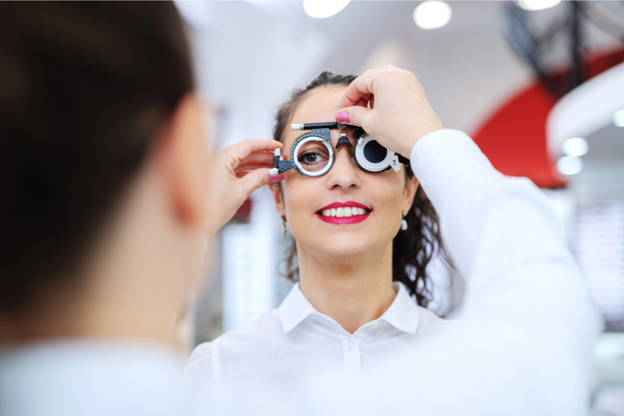
Most people view an annual trip to the eye doctor as a standard item on their health checklist, similar to a dental cleaning. There is a common belief that if you can see clearly with your glasses or contacts, your eyes are in good shape. Many patients assume annual exams are enough to catch every possible issue, but a standard vision check has its limits.
The difference between routine vision care and medical eye care lies in scope. Routine care focuses on how well you see, while medical care focuses on the biological health and function of the eye structures. While a basic exam is a great starting point, it may not be equipped to manage deep-rooted health issues or sudden changes in your visual system.
Often, people wait until a problem becomes undeniable before seeking help. However, how subtle symptoms often get overlooked can determine the future of your sight. Recognizing when a situation moves beyond a simple prescription update is the best way to protect your vision for the long term.
What “Routine Eye Care” Covers
A routine eye exam is primarily designed to assess vision and prescribe glasses. During these visits, the provider focuses on how light enters your eye and whether your lenses need adjustment. This is where you find out if you have nearsightedness, farsightedness, or astigmatism.
Beyond checking your sight, these exams include a basic eye health screening. This usually involves a physical look at the front of the eye and perhaps a quick look at the back. It serves as a preventative measure to catch obvious problems in people who otherwise feel healthy.
Routine care is also used for monitoring common refractive errors. If your prescription stays steady year after year, these visits keep your sight sharp. When routine care is appropriate, it acts as a reliable baseline. It is perfect for healthy individuals with no family history of disease and no physical symptoms of discomfort or change.
Signs Your Eyes May Need More Than Routine Care
If you notice changes that do not go away with a new pair of glasses, you likely need a medical evaluation. Certain physical sensations and visual distortions act as warning signs.
- Persistent eye pain or pressure: Eyes should not hurt. If you feel an ache behind the eye or a feeling of fullness, it could point to internal issues.
- Sudden changes in vision: If your sight becomes blurry or distorted over a few days or hours, this is never normal.
- Flashes, floaters, or shadows: While a few floaters are common, a sudden increase in floaters or bright flashes of light can signal a problem with the retina.
- Chronic redness or irritation: Eyes that stay red or feel gritty for weeks may be dealing with more than just seasonal allergies.
- Light sensitivity: If normal indoor lighting feels painful, there may be inflammation inside the eye.
- Frequent headaches linked to vision: Headaches that occur after reading or using a computer often mean the eyes are struggling to work together.
- Difficulty with night driving: Increased glare or reduced contrast at night can be an early sign of structural changes.
- Loss of side vision: This often happens so slowly that people do not notice until it is advanced, making it a major red flag.
Also Read: Flashes, Floaters, or Curtain Over Vision? What LA Patients Should Do
Conditions That Require Medical Eye Evaluation
When a condition goes beyond a refractive error, it falls under medical eye care. These issues involve the eye’s physical tissues and nerves.
Glaucoma is a primary example. It often has no symptoms in its early stages and requires specialized testing to assess internal pressure and nerve function. Similarly, Macular degeneration affects the center of your vision and requires medical monitoring to prevent it from worsening.
Cataracts are a natural part of aging, but they require a specialist to decide when surgery is needed. Diabetic eye disease is another serious concern; high blood sugar can damage the small blood vessels in the back of the eye, requiring frequent medical checks.
Other issues, such as infections and inflammation, retinal issues, and corneal disorders, cannot be managed with a simple vision plan. These require medical-grade treatments and monitoring.
Also Read: Cataract vs Glaucoma vs Macular Degeneration: Key Differences
Risk Factors That Increase the Need for Specialized Care
Some people are more likely to need medical eye care based on their background and health status. A family history of eye disease is one of the strongest indicators. If one of your parents has glaucoma or macular degeneration, you are at a higher risk.
General health also plays a part. Diabetes or high blood pressure can directly affect the retina. Autoimmune conditions, such as lupus or rheumatoid arthritis, can cause dryness and internal inflammation that routine drops cannot fix.
Physical history matters too. Eye injuries, even those from years ago, can lead to issues later in life. Long-term contact lens use can sometimes lead to corneal changes or chronic dryness. Finally, aging naturally increases the risk of many eye conditions, making medical exams more frequent as people age.
When to See an Ophthalmologist or Eye Specialist
Knowing who to see is just as important as knowing when to go. You should seek out a specialist for sudden or unexplained vision changes. If you wake up and cannot see clearly, or if things look wavy, you need a medical expert.
Painful or red eyes that don’t improve with over-the-counter drops should be checked by a specialist to rule out a serious infection. Visual field changes, such as dark spots or curtains falling across your field of vision, are emergencies.
Furthermore, any trauma to the eye, whether from a chemical splash or a physical hit, needs an immediate medical check. Lastly, post-surgical concerns after procedures, such as LASIK or cataract surgery, must be managed by an ophthalmologist.
Also Read: Best Cataract Surgeon in LA? 5 Questions to Ask Before You Decide
What to Expect From a Medical Eye Exam
A medical exam is much more detailed than a vision test. It usually starts with a dilated eye examination, during which drops are used to dilate your pupils. This allows the doctor to clearly see the entire retina and the optic nerve.
You can also expect advanced imaging. These tools capture high-resolution photos or cross-sectional scans of the eye’s layers. Eye pressure testing is also a staple, as it helps identify glaucoma risk.
During the retinal evaluation, the doctor looks for signs of bleeding, thinning, or damage. All of this data leads to personalized treatment planning, which might include medication, laser therapy, or a surgical plan, rather than just a prescription for glasses.
Why Early Detection Matters
The most compelling reason to seek medical eye care is to prevent permanent vision loss. Many eye diseases are silent, meaning they damage your sight before you feel any pain. By the time you notice a change, the damage may be irreversible.
Slowing disease progression is the main focus of medical intervention. While some conditions cannot be cured, they can be managed so that you keep your sight for decades. This is about preserving the quality of life, allowing you to keep driving, reading, and recognizing faces.
Finally, staying ahead of these issues is about avoiding emergency situations. Regular medical checks can find a small retinal tear before it becomes a full detachment that requires major surgery.
How Routine and Medical Eye Care Work Together
The best approach to health is a coordinated care model. This involves the role of optometrists and ophthalmologists working as a team. An optometrist often handles routine care and is usually the first to spot a potential medical issue.
Transitioning between providers should be seamless. If your primary eye doctor sees something concerning, they refer you to a specialist for a more thorough evaluation. This creates a long-term eye health strategy where your vision is sharp today, and your eye health is protected for tomorrow.
Conclusion
It is a mistake to assume that seeing 20/20 means your eyes are perfectly healthy. Not all eye concerns fit into routine exams, and many sight-threatening conditions may not change your prescription at first.
Listening to symptoms protects vision more than any routine test ever could. If something feels off or if you have risk factors like diabetes, early evaluation brings clarity to your situation. Specialized care prevents lasting damage, ensuring that you don’t just see well now, but for the rest of your life.
Contact Soroudi Advanced LASIK and Eye Centers today to learn more.