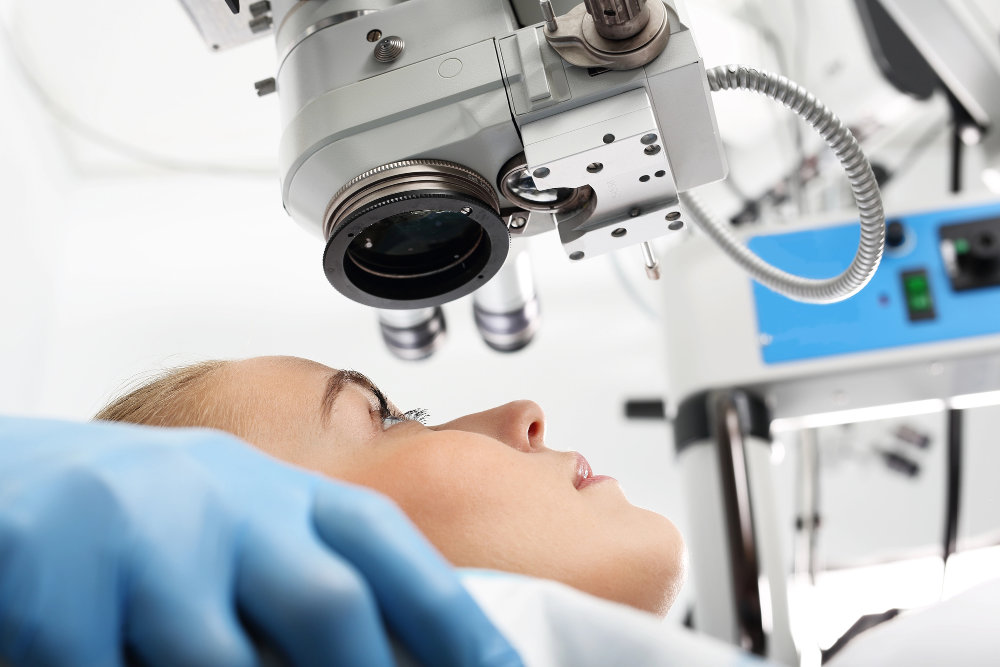
Choosing the Right Ophthalmologist in Glendale

Choosing the best ophthalmologist in Glendale, CA, is a decision that impacts not just your clarity of sight but your long-term quality of life. Whether you are seeking life-changing LASIK, expert cataract surgery, or specialized treatment for a complex condition like glaucoma or keratoconus, the expertise of your surgeon is the single most important factor.

At Soroudi Advanced LASIK & Eye Centers, we combine over 20 years of surgical experience with the most advanced diagnostic and laser technology available.

What Makes an Ophthalmologist Different?

When looking for an eye doctor in Glendale, it is important to understand the different levels of care available. While both optometrists and ophthalmologists are key to eye health, their training and capabilities differ significantly.
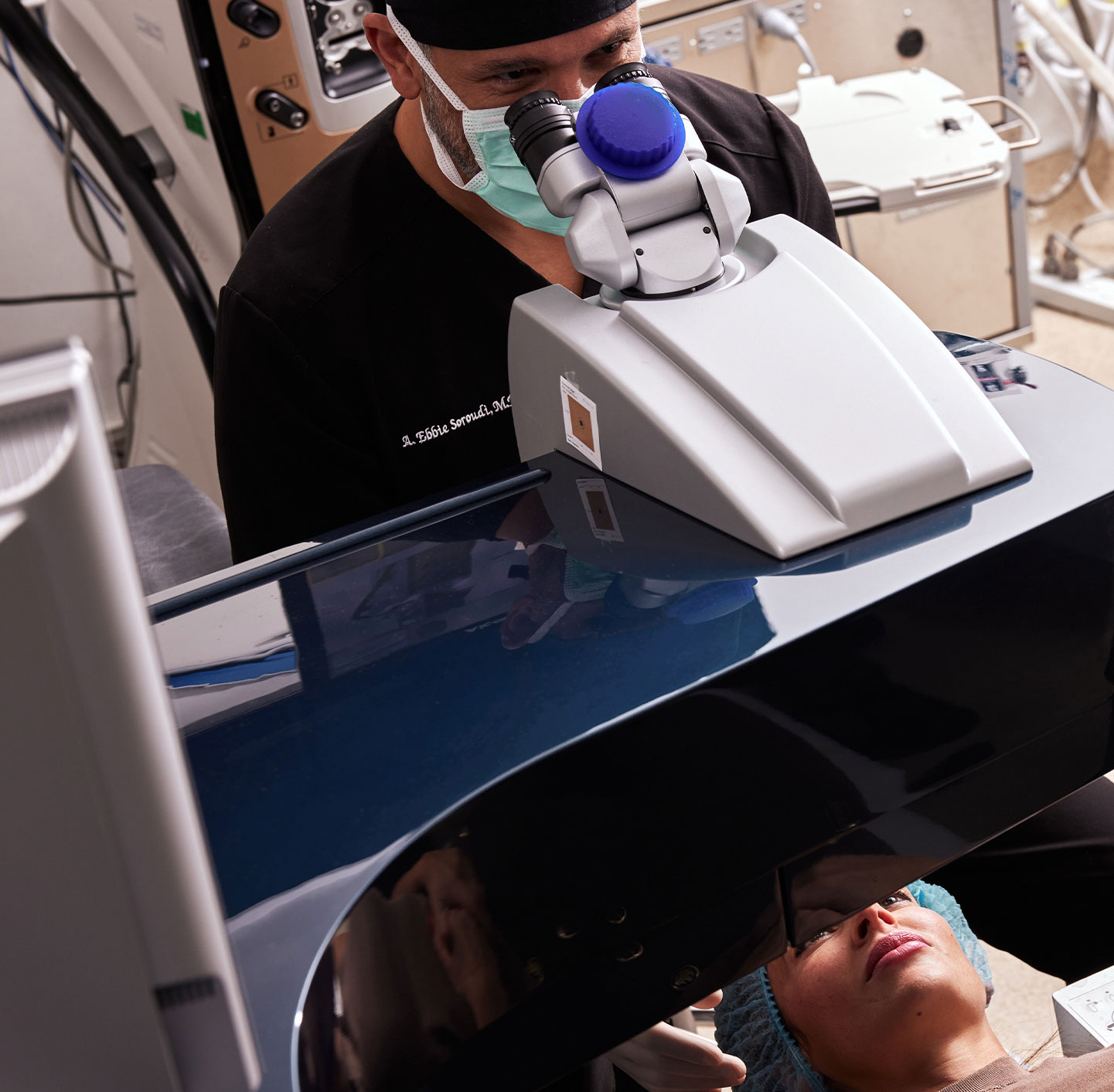
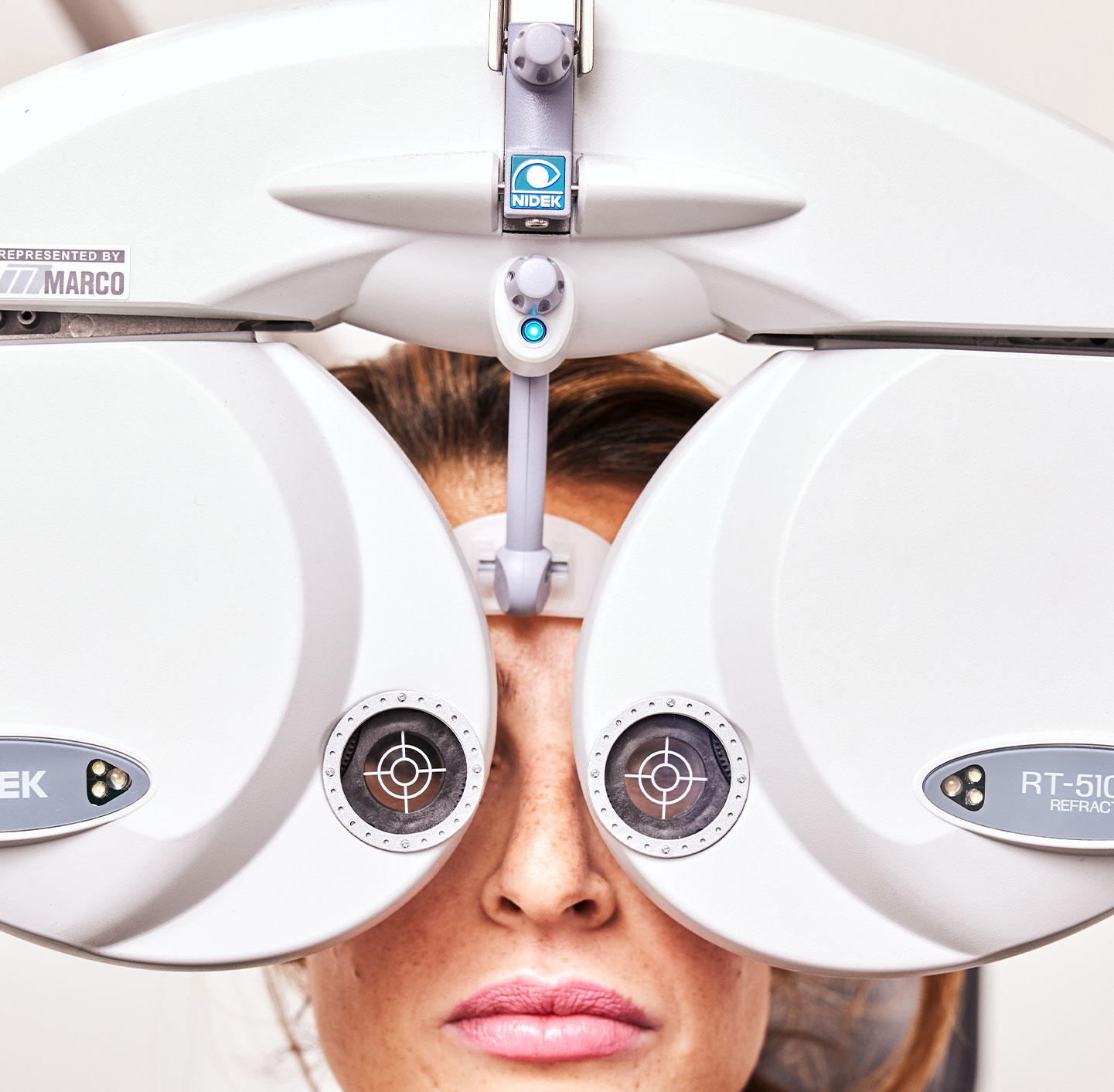
Ophthalmologist vs. Optometrist

  • Ophthalmologist (MD or DO): A medical doctor who specializes in the medical and surgical care of the eyes. Ophthalmologists complete at least 12 years of education and training, including medical school and a surgical residency. They are licensed to perform complex surgeries like LASIK and cataract removal and to treat advanced eye diseases.
  • Optometrist (OD): A healthcare professional who provides primary vision care, ranging from sight testing and correction to the diagnosis and management of certain vision changes.

If you require LASIK in Glendale or are seeking a cataract surgeon in Glendale, you need the specialized surgical expertise of an ophthalmologist.

Comprehensive Eye Care Under One Roof

Soroudi Advanced LASIK & Eye Centers offers a total care model. From your first comprehensive eye exam in Glendale, CA, to advanced surgical interventions and post-operative follow-ups, every aspect of your vision is managed by a highly trained medical team. This continuity of care ensures that even the most subtle changes in your eye health are caught and treated early.

Comprehensive Eye Conditions Treated

Refractive Errors

Most vision issues stem from the shape of the eye, which prevents light from focusing correctly on the retina. We treat:

  • Nearsightedness: Difficulty seeing distant objects.
  • Farsightedness: Difficulty seeing close objects.
  • Astigmatism: Distorted vision at all distances due to an irregular corneal shape.
  • Presbyopia: The age-related loss of near-focusing ability, typically affecting adults over 40.


Cataracts

A cataract is the gradual clouding of the eye’s natural lens. As the leading cataract surgeon in Glendale, Dr. Soroudi utilizes modern, small-incision techniques to restore clarity. Modern cataract surgery is now often a refractive procedure, meaning we can reduce your dependence on glasses at the same time we remove the cataract.

Dry Eye Disease

Chronic irritation, burning, or fluctuating vision are hallmark signs of Dry Eye. We move beyond simple over-the-counter drops, offering advanced strategies to treat the root cause of tear film dysfunction.

Glaucoma

Often called the “silent thief of sight,” glaucoma is caused by increased eye pressure that damages the optic nerve. As a glaucoma treatment specialist in Glendale, our goal is to detect glaucoma early and provide long-term monitoring to prevent irreversible vision loss.

Keratoconus and Corneal Conditions

Dr. Soroudi is a recognized retina specialist near Glendale, CA, and an expert in corneal diseases. For patients with keratoconus (a thinning and bulging of the cornea), we provide advanced diagnostics and specialized treatments like Intacs® or collagen cross-linking.

Advanced Vision Correction Options

For many, the goal of visiting an eye specialist in Glendale is to achieve visual freedom, the ability to see clearly without the daily hassle of contacts or glasses.

LASIK

LASIK eye surgery in Glendale, CA, remains the gold standard for rapid vision correction. Using a cool beam of light to reshape the cornea, LASIK can correct nearsightedness, farsightedness, and astigmatism. Most patients report significant improvement in vision within 24 hours.

PRK

PRK is an excellent alternative for patients whose corneas may be too thin for traditional LASIK. It provides the same high-quality visual outcomes but uses a different method to access the corneal tissue.

Refractive Lens Exchange

Lens-based technology has advanced tremendously.

  • EVO ICL: A permanently implantable contact lens that stays in the eye and provides high-definition vision.
  • RLE: For patients who are not candidates for laser surgery (often due to high prescriptions or early-stage cataracts), replacing the natural lens with a premium intraocular lens can provide permanent vision correction.

Cataract Surgery and Lens Options

Modern Cataract Surgery

  • Outpatient Convenience: The procedure typically takes less than 15 minutes per eye. You arrive at our Glendale center, undergo the surgery under light sedation and numbing drops, and return home the same day.
  • Bladeless Laser Technology: We utilize Femtosecond Laser-Assisted Cataract Surgery (FLACS). Unlike traditional methods that use manual blades, the laser creates microscopic, computer-guided incisions and pre-softens the cataract for gentler removal.
  • Small-Incision “Micro-Surgery”: We use a technique called phacoemulsification, where ultrasound energy (minimized by our laser pre-treatment) breaks the cataract into tiny fragments. These are removed through an incision so small (often less than 2.4mm) that it is self-sealing and requires no stitches.
  • Rapid Visual Recovery: Most patients notice a significant improvement in clarity and color vibrancy within 24 to 48 hours, with many returning to work and driving in just a few days.

Also Read: Cataract vs Glaucoma vs Macular Degeneration: Key Differences

Premium Intraocular Lens Options

While a standard lens is life-changing, it typically only corrects vision for one distance (usually far away), meaning you will still need reading glasses. Premium IOLs are designed to reduce or eliminate that dependence.

  1. Trifocal and Multifocal Lenses
    These are all-in-one solutions. By using advanced optical rings, these lenses split light to provide clear focus at three distinct points:
    • Distance: For driving and watching TV.
    • Intermediate: For computer work and seeing your dashboard.
    • Near: For reading books and text messages.
  2. Extended Depth of Focus (EDOF) Lenses
    EDOF lenses create a single, elongated focal point. This provides a continuous range of high-quality vision from distance through the intermediate range. They are often preferred by patients who want a more natural visual transition and are less concerned about needing minor reading glasses for very fine print.
  3. Toric Lenses
    If you have astigmatism, your eye is shaped more like a football than a basketball. Standard lenses cannot fix this, but Toric IOLs are specifically weighted and aligned to cancel out your astigmatism, providing crisp, sharp vision without the blur or “ghosting” often caused by an irregular cornea.
  4. The Light Adjustable Lens (LAL)
    The LAL is the ultimate in customization. It is the only lens in the world that can be adjusted after surgery. Once your eye has healed, we use a specialized UV light device in our office to fine-tune the lens power until your vision is exactly where you want it, before locking it in.

Technology and Diagnostic Precision

Advanced Eye Mapping

Standard vision tests only measure nearsightedness, farsightedness, and astigmatism. Our advanced mapping technology goes deeper, identifying the microscopic higher-order aberrations that cause glare, halos, and poor contrast.

  • Corneal Imaging (Topography & Tomography): We use Scheimpflug imaging and Placido disc systems to create a 3D contour map of your cornea. This reveals the elevation, thickness, and curvature of the eye’s surface with micron-level accuracy, essential for detecting early-stage keratoconus or planning topography-guided LASIK.
  • Wavefront Analysis (Aberrometry): Often called an optical fingerprint, wavefront technology measures how light travels through your entire visual system. By passing a beam of light through the eye and reflecting it off the retina, we capture unique imperfections in your lens and cornea that a standard phoropter would miss.
  • Precise Treatment Planning: All data points, over 1,200 from mapping and wavefront scans, are integrated into a digital twin of your eye. This allows us to program the laser with a custom blueprint, ensuring the treatment is perfectly centered and optimized for your specific ocular landscape.

Personalized Surgical Planning

Our surgical planning process is driven by AI-enabled analytics that compare your data against thousands of successful outcomes to predict the most stable result.

  • Customized Vision Correction: Whether we are performing LASIK, SMILE, or PRK, the laser pattern is adjusted based on your unique wavefront data. This level of customization is why many of our patients achieve vision that is actually better than 20/20.
  • Individual Eye Anatomy: We account for more than just your prescription. We factor in the physical length of your eye, pupil dynamics in low light, and even the flexibility of your corneal tissue. This is particularly vital for Premium IOL calculations in cataract surgery, where even a half-millimeter difference matters.
  • Predictable Outcomes: By using advanced software platforms, we can simulate your results before the procedure begins. This allows for incredibly high surgical hit rates, reducing the need for enhancements and giving you confidence that your new vision will be sharp, clear, and long-lasting.

The Patient Experience

Searching for the best ophthalmologist in Glendale, CA, often leads patients to our doors because of our reputation for personalized care.

Comprehensive Consultation

Your journey begins with a detailed evaluation. We don’t just check your vision; we also discuss your hobbies, profession, and goals. Do you drive a lot at night? Do you spend 8 hours a day on a computer? These details shape your treatment plan.

Clear Treatment Planning

We believe in transparency. You will receive a clear explanation of your options, including the risks, benefits, and expected recovery time. Whether it’s a routine comprehensive eye exam in Glendale or a complex surgery, you will always know what to expect.

Ongoing Follow-Up Care

Vision care doesn’t end when the surgery is over. We provide rigorous post-operative monitoring and long-term preventive care to ensure your results stay crisp and your eyes stay healthy for decades to come.

Also Read: How to Choose the Best Cataract Surgeon in Los Angeles

The Patient Experience

At Soroudi Advanced LASIK & Eye Centers, we believe the journey to better vision should be as clear as the results.

Comprehensive Consultation

  • Detailed Vision Testing: Using advanced eye mapping technology, we perform a full battery of diagnostic tests. This includes digital refractometry, corneal topography, and optical coherence tomography (OCT) to examine the retina and optic nerve beneath the surface.
  • Lifestyle Discussion: We take the time to understand how you use your eyes. Are you a professional pilot, a software engineer, or a competitive athlete? Do you enjoy night driving or intricate needlework? These lifestyle factors help determine whether LASIK, PRK, or a specific premium lens is best suited for your life.
  • Treatment Options Review: After gathering your data, Dr. Soroudi personally reviews the findings with you. We don’t just tell you what we recommend; we show you the scans of your eyes and explain the reasoning behind every suggestion.

Clear Treatment Planning

  • Personalized Recommendations: Based on your unique anatomy, we provide a tiered treatment approach. We discuss the pros and cons of each technology, such as the difference between a standard monofocal lens and a Light Adjustable Lens (LAL), so you can make an informed decision.
  • Transparent Expectations: We are committed to radical honesty. If you are not a candidate for LASIK, we will explain why and offer the safest alternative. We provide a clear breakdown of costs, financing options, and the realistic visual outcomes you can expect.
  • Recovery Guidance: You will leave your consultation with a “Day Zero” plan, including a detailed healing timeline from the first hour post-op to the final stabilization period, so you feel prepared and confident.

Ongoing Follow-Up Care

  • Post-procedure Monitoring: We schedule regular check-ups—typically at daily, weekly, and monthly intervals—to monitor healing and visual acuity, ensuring your eyes are responding favorably to treatment.
  • Long-term Vision Management: Vision can change over time. We maintain your records for years and decades, allowing us to track subtle shifts in eye health and provide fine-tuning as your lifestyle evolves.
  • Preventive Care: Beyond surgical results, we focus on overall ocular wellness. This includes screening for age-related conditions, managing dry eye, and providing nutritional guidance to help protect your macula and retina for life.

Why Experience Matters in Ophthalmology

Surgical Volume and Skill

  • Refined Technique: With over 20 years of experience and 60,000+ eye procedures, Dr. Soroudi has refined the micro-movements required for delicate eye surgery. Whether it is the perfect LASIK flap or the gentle fragmentation of a dense cataract, a seasoned surgeon performs with a level of muscle memory that ensures efficiency and safety.
  • Predictable Results: High surgical volume allows a surgeon to develop a “nomogram,” a personalized database of results. By analyzing how thousands of previous patients healed, we can predict your specific visual outcome with incredible accuracy.
  • Reduced Complications: Experience is most vital not when things go perfectly, but in the rare moments they don’t. An experienced cataract surgeon in Glendale can identify and manage anatomical variations mid-procedure, drastically reducing the risk of complications.

Commitment to Advanced Technology

  • Updated Laser Platforms: We use the latest-generation excimer and femtosecond lasers. These platforms offer faster treatment times and cool-light technology that minimizes tissue thermal impact, leading to faster healing and better HD vision.
  • Modern Cataract Equipment: Our surgical suite maintains consistent eye pressure during cataract removal. This equipment adapts to the eye in real time, providing an additional layer of protection for the corneal endothelium.
  • Precision Diagnostics: Before you ever enter the operating room, our diagnostic suite, including high-resolution OCT and digital biometry, ensures the measurements used to program our lasers and calculate your intraocular lenses are accurate to within a fraction of a millimeter.

Individualized Care Approach

  • Not One-Size-Fits-All: While some centers may only offer one type of LASIK or one brand of cataract lens, we provide a full spectrum of options. If your corneal thickness or lifestyle isn’t a fit for LASIK, we have the expertise to offer PRK, ICL, or RLE.
  • Patient-Centered Planning: We don’t just treat eyes; we treat people. Our surgical plans are built around your hobbies, career, and nighttime driving needs. We take the time to explain the science behind your surgery so you feel like an informed participant in your care.
  • Long-Term Visual Health: Our goal isn’t just to get you through surgery; it’s to ensure you see clearly for the next 30 years. This longitudinal view of eye health means we prioritize procedures that preserve the structural integrity of your eye for the long haul.

Also Read: Why Patients Choose Soroudi Advanced Lasik & Eye Centers for the Best LASIK in LA

When to See an Ophthalmologist

Many people wait until their vision is significantly impaired before seeking professional help. However, early intervention by a board-certified ophthalmologist in Glendale can prevent permanent damage and open the door to life-changing vision correction.

Changes in Vision

  • Blurry Vision: If your vision feels out of focus even with your current glasses, it may indicate a change in your prescription or an underlying health issue like cataracts.
  • Halos or Glare: Seeing rings around lights at night or experiencing extreme sensitivity to bright sunlight often points to corneal irregularities or lens clouding.
  • Difficulty Driving at Night: If the road looks dim or oncoming headlights are blinding, your contrast sensitivity may be declining.

Eye Discomfort

  • Persistent Dryness: If your eyes feel gritty or like there is a foreign object in them, you may have Dry Eye Disease, which requires medical-grade management beyond standard drops.
  • Eye Pain: Any sharp or dull eye pain should be evaluated immediately to rule out high intraocular pressure or inflammation.
  • Light Sensitivity: Sudden sensitivity to light can be a symptom of corneal abrasions, infections, or inflammation of the internal eye.

Considering Vision Correction

  • Desire to Reduce Dependence on Glasses: If you are tired of the daily hassle of contacts or frames, it’s time to explore permanent options.
  • Exploring LASIK: If you are over 18 and have a stable prescription, a LASIK Glendale consultation can determine if you are a candidate for laser reshaping.
  • Cataract Symptoms: If your world is turning yellow or your vision is increasingly cloudy, an ophthalmologist can discuss modern lens replacement options.

Why Patients Choose Us for Eye Care in Glendale

Reputation and Experience

  • Proven Results: With over 60,000 procedures performed, our patients trust us for consistent, high-quality outcomes.
  • Established Practice: Serving Glendale for more than 20 years, we offer stability and long-term care you can rely on.
  • Advanced Procedures: We handle complex cases, including revisions and secondary surgeries, often referred elsewhere.

Comprehensive Services

  • Medical and Surgical Care: From routine eye conditions to advanced glaucoma management, we provide complete care.
  • Vision Correction: LASIK, PRK, ICLs, and Refractive Lens Exchange (RLE) are all available under one roof.
  • Long-Term Eye Health: Our goal is not just correcting vision but preserving ocular health for life.

Local Accessibility

  • Convenient Glendale Location: Easily accessible for city residents, with modern facilities designed for comfort.
  • Serving Surrounding Communities: Patients come from Burbank, Pasadena, La Cañada, and across Los Angeles County.

What to Expect at Your First Visit

Detailed Eye Examination

  • Vision Testing: A precise measurement of your current visual acuity and refractive error.
  • Eye Health Evaluation: A thorough check of your eye’s internal and external structures, including the retina, optic nerve, and cornea.
  • Diagnostic Imaging: We use high-resolution scans, such as OCT and corneal topography, to create a digital map of your eye.

Discussion of Treatment Options

  • Risks and Benefits: We provide a candid, transparent discussion of every potential procedure.
  • Recovery Expectations: You will receive a clear timeline for your healing process.
  • Personalized Plan: No two eyes are alike; your treatment plan is tailored to your anatomy and lifestyle.

Conclusion

Choosing the Best Ophthalmologist in Glendale Requires Careful Consideration

Your choice of surgeon is the most important variable in your visual outcome. Experience matters; it provides the skill to handle complexity. Technology matters; it provides the precision to achieve “HD” results. Personalized care matters: it ensures your treatment matches your life.

Comprehensive Eye Care Improves Long-Term Vision Health

By choosing a full-service ophthalmic center, you ensure early diagnosis of silent conditions like glaucoma, access to advanced treatment for cataracts and refractive errors, and the peace of mind that comes with ongoing monitoring from a team that knows your history.

FAQs

What is the difference between an ophthalmologist and an optometrist?

An ophthalmologist is a medical doctor (MD) who performs surgery and treats complex eye diseases. An optometrist focuses on primary eye care, vision exams, and prescribing corrective lenses, but does not perform most surgeries.

When should I see an ophthalmologist instead of a regular eye doctor?

See an ophthalmologist if you are considering surgery (LASIK, cataracts) or have a chronic eye disease like glaucoma or macular degeneration.

How do I know if I am a good candidate for LASIK?

A comprehensive screening will evaluate your corneal thickness, overall eye health, and prescription stability.

What conditions does an ophthalmologist treat?

Ophthalmologists treat everything from cataracts and glaucoma to retinal detachments, keratoconus, and severe dry eye.

How often should adults have a comprehensive eye exam?

Generally, every 1–2 years, depending on your age and risk factors.

What are the early signs of cataracts?

Faded colors, poor night vision, and frequent changes in your prescription are common early signs.

Is LASIK surgery safe?

Yes, LASIK is among the safest elective surgeries available today.

How long does recovery take after LASIK?

Most patients see clearly within 24 hours and can return to work the next day.

What are my options if I am not a candidate for LASIK?

Alternatives include PRK, EVO ICL, and Refractive Lens Exchange (RLE).

How is glaucoma diagnosed and monitored?

Through eye pressure measurements, optic nerve scans (OCT), and visual field testing.

Can dry eye disease be permanently treated?

Dry eye can be effectively managed and controlled with advanced clinical treatments.

What should I expect during my first ophthalmology consultation?

You will undergo dilation, advanced imaging, and a one-on-one consultation with Dr. Soroudi.

Are premium lens implants worth considering during cataract surgery?

Yes, they can significantly reduce your dependence on reading glasses.

Does insurance cover visits to an ophthalmologist?

Most medical insurance covers exams for medical issues; vision correction procedures are often elective or add-on benefits.

How do I choose the best ophthalmologist in Glendale?

Look for board certification, high surgical volume, and a commitment to the latest technology.

Don’t leave your vision to chance. Whether you are ready to eliminate glasses with LASIK Glendale services or require life-changing cataract surgery, the first step is a professional evaluation at Soroudi Advanced LASIK & Eye Centers. Contact us today!

Contact us media
Accessibility: If you are vision-impaired or have some other impairment covered by the Americans with Disabilities Act or a similar law, and you wish to discuss potential accommodations related to using this website, please contact our Accessibility Manager at (310) 474-2010.
Contact Us